
The Typewriter: The Loud, Clunky Machine That Built Modern Writing
The Typewriter is the story of one of the most gloriously stubborn pieces of classic tech ever created. Welcome back to the GearLab, where we give proper respect to the noisy, heavy, wonderfully mechanical beasts that modern laptops secretly fear.
Before autocorrect, before backspace, before glowing rectangles stole our souls — there was the typewriter. A machine so committed to its job that it made a gloriously loud CLACK-CLACK-DING every time you finished a line, like it was personally proud of you.
Let’s give this mechanical legend the chaotic respect it deserves.
Affiliate Disclosure: This post contains affiliate links. If you make a purchase through these links, we may earn a small commission at no extra cost to you. This helps support GearLab Reviews and keeps the lab running. Thank you!
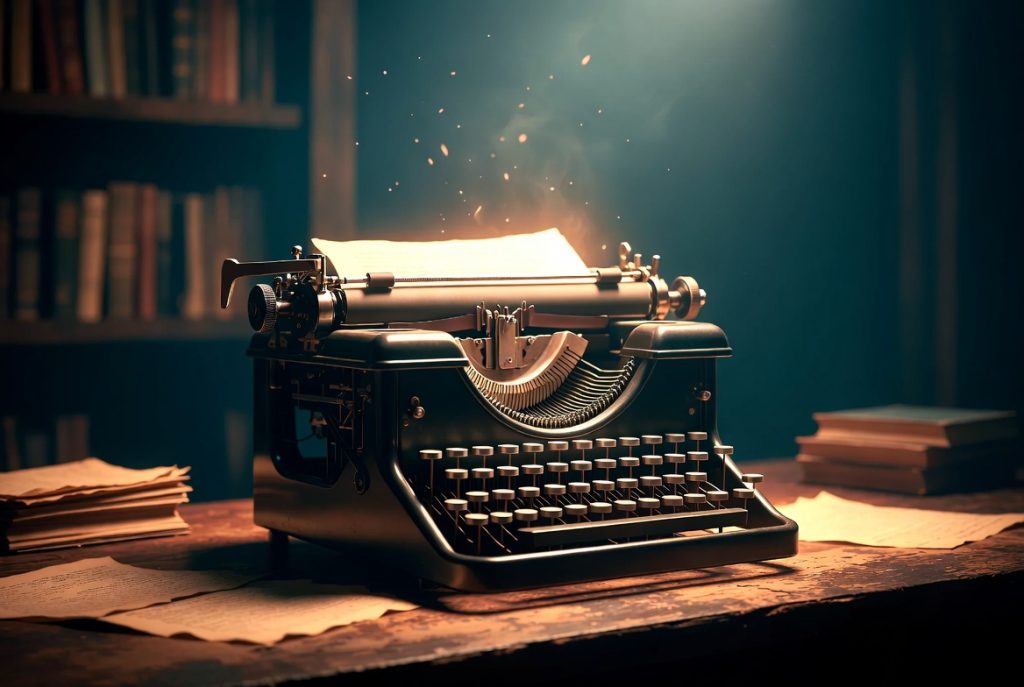
The Chaotic Birth of the Typewriter
Typewriter history begins in the mid-1800s, when several slightly unhinged inventors decided that writing by hand was too slow for the industrial revolution.
The first commercially successful typewriter was the Sholes & Glidden machine in 1874. It was slow, clunky, and looked like it belonged in a mad scientist’s basement. Mark Twain famously bought one of the early models and became the first author to submit a typewritten manuscript to a publisher.
Early typewriters were absolute monsters. They jammed constantly. The keys were laid out in a ridiculous order (the famous QWERTY layout was actually designed to slow typists down so the machine wouldn’t jam). And yet… people lost their minds over them.
How the Typewriter Took Over the World
By the early 1900s, the typewriter had become the undisputed king of written communication. Offices filled with the beautiful mechanical symphony of dozens of typists hammering away. Secretaries became power players. Professional writers finally had a proper tool.
Typewriter history during its golden age was glorious:
- The iconic “ding” at the end of every line
- The satisfying thunk of the carriage return
- Carbon paper copies (because Ctrl+C didn’t exist)
- That unmistakable smell of ink ribbons and metal
It was loud. It was heavy. It was gloriously analog.
Back in the golden age of typewriter history, high schools actually offered entire classes dedicated to typing. Students would sit in rows, hammering away on clunky machines while teachers barked “Fingers on the home row!” like drill sergeants. These weren’t just electives — they were serious business. Typing class was basically the 20th-century version of learning to code. Many a future writer, secretary, and journalist got their start pounding keys in those noisy classrooms, dreaming of the day they’d finally master the mystical art of not looking at their fingers.
Why the Typewriter Is Still Cool in 2026
In 2026, we have AI that can write entire essays while we stare at the ceiling. Yet people are still buying vintage typewriters, mechanical keyboard enthusiasts are spending $400 on “thocky” switches, and hipsters are proudly clacking away in coffee shops.
Why?
Because the typewriter forces you to commit. There’s no backspace key that lets you endlessly rewrite the same sentence. You type it, you own it. That psychological pressure actually makes many people write better.
The Glorious Pros:
- Forces you to think before you type
- Zero distractions (no notifications, no tabs, no “just one more YouTube video”)
- Beautiful mechanical feedback
- Feels like you’re actually doing something important
- Looks insanely cool on a desk
- Still works during a power outage
The Honest Cons:
- Loud as hell
- Mistakes are permanent (hello, correction tape)
- Heavy enough to be used as a murder weapon
- Changing ribbons is a minor act of violence
If you enjoy diving into other pieces of classic tech that shaped how we work and create, check out our look at The Polaroid Camera: The Original Instant Gratification Machine. Like the typewriter, it’s a beautifully imperfect device that gave us something digital versions still struggle to match.
GearLab Verdict: The typewriter is peak classic tech. It’s loud, demanding, and gloriously inefficient by modern standards — and that’s exactly why we love it. In a world of frictionless digital tools that make everything feel weightless, the typewriter reminds us that good writing should feel like work.
It’s not just a machine. It’s a philosophy with keys.
Typewriter history proves that sometimes the best tools aren’t the most advanced — they’re the ones that force you to show up and do the damn work.
And honestly? We respect the hell out of that noisy, stubborn, beautiful machine.
Ready to experience the satisfying clack for yourself? You can explore modern mechanical keyboards and typewriter-inspired accessories on Amazon. For those who want the real vintage experience, search for restored classic typewriters on Amazon or specialty sites.
Affiliate Disclosure: This post contains affiliate links. If you make a purchase through these links, we may earn a small commission at no extra cost to you. Thank you for supporting the site!